
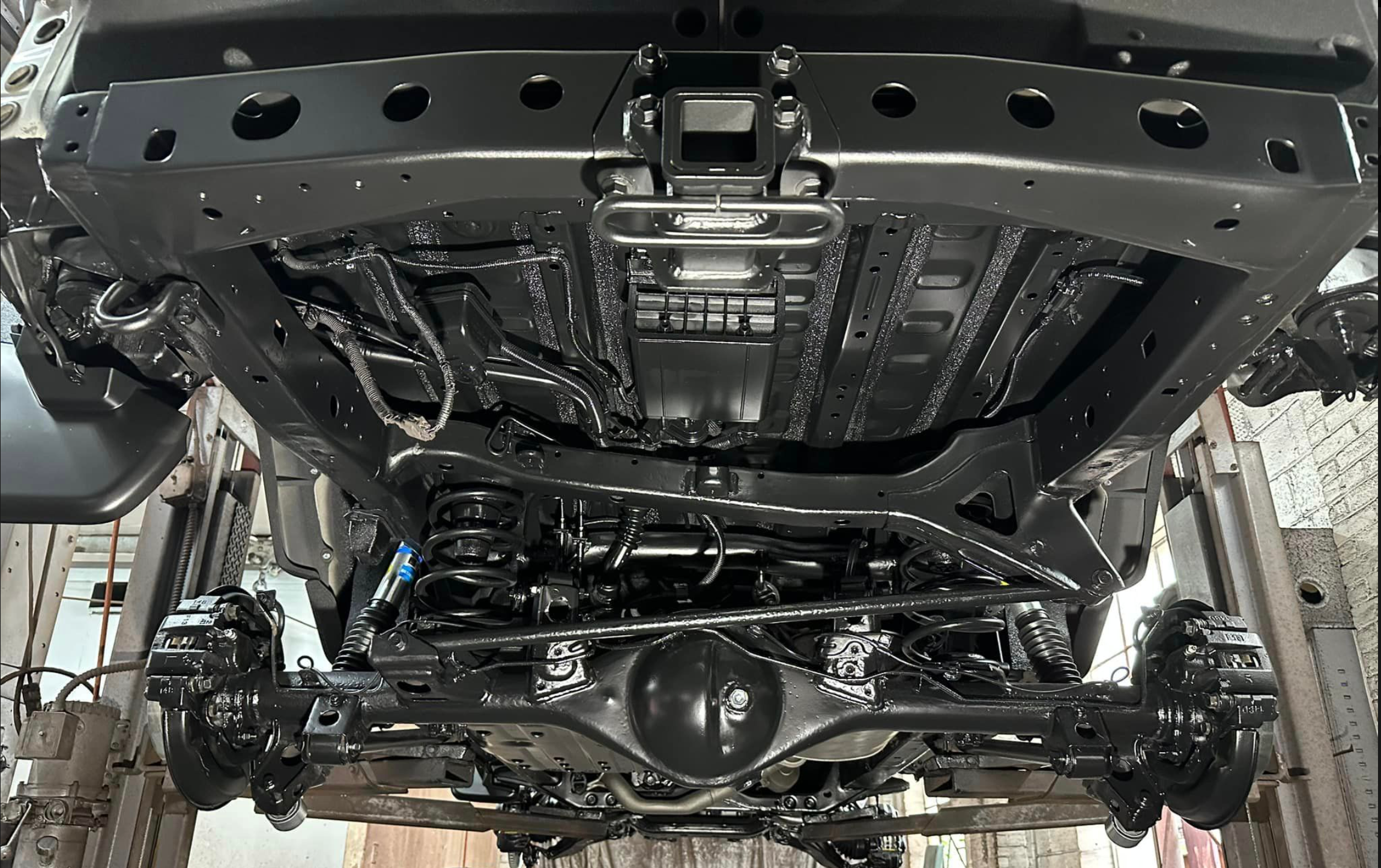
Can You Rustproof a Vehicle That Already Has Rust?
Yes — in many cases, a vehicle with existing surface rust can still be rustproofed.
Professional rustproofing can help slow the progression of existing corrosion and protect exposed metal from additional moisture, road salt, and winter contamination. However, rustproofing does not remove rust that has already formed, and it cannot repair severely corroded or structurally damaged metal.
For Ohio drivers, this means a vehicle does not necessarily need to be brand new or rust-free to benefit from rust protection.
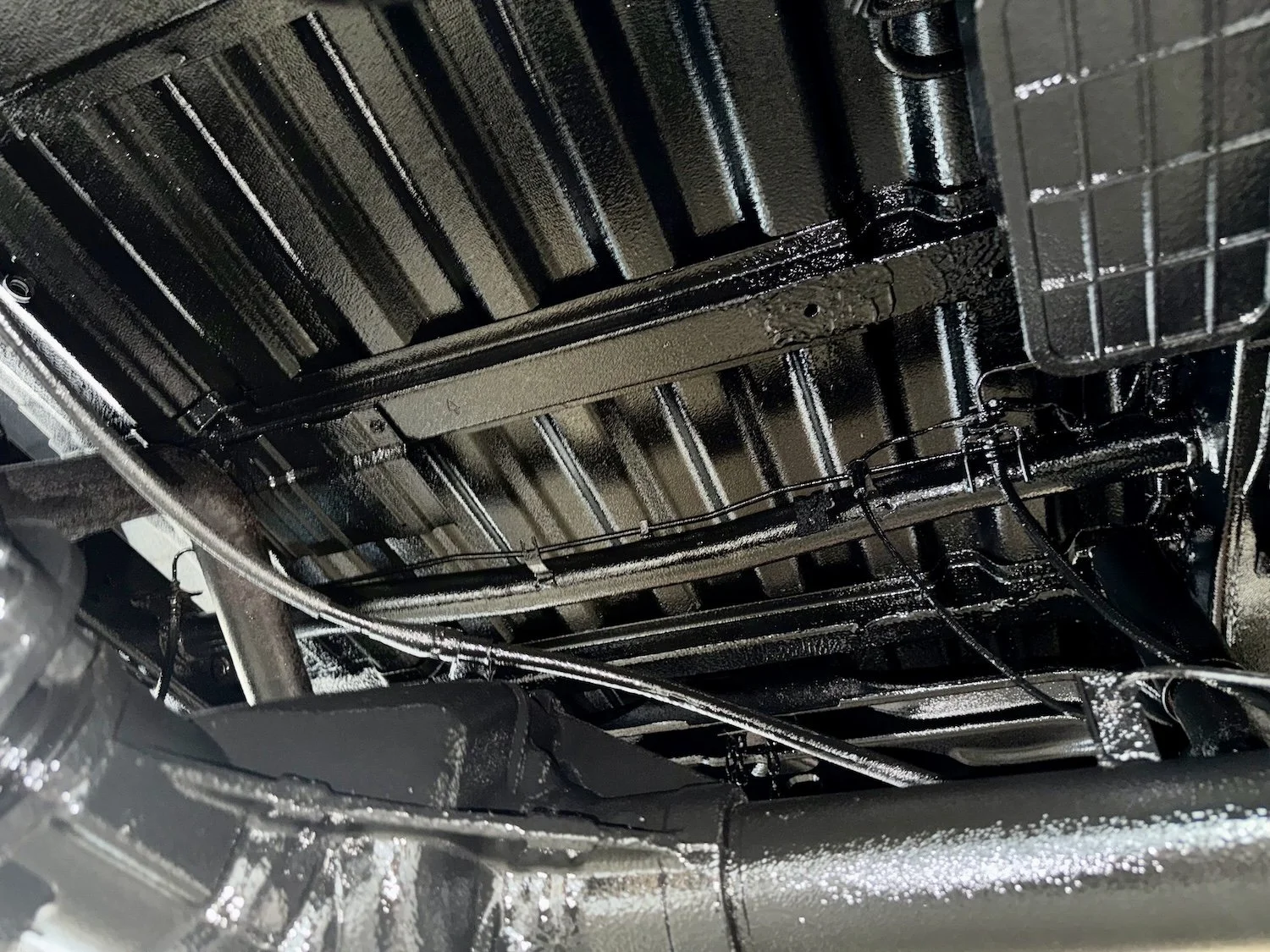
Can Rustproofing Stop Existing Rust?
Rustproofing can help slow existing surface rust, but it should not be thought of as a rust repair.
Rust forms when metal is exposed to oxygen and moisture. Road salt and liquid brine accelerate that process, which is why vehicles driven through Northeast Ohio winters are especially vulnerable.
A professional rustproofing product helps create a barrier between the metal and the elements, reducing continued exposure to:
Road salt
Liquid brine
Water and moisture
Snow and slush
Dirt and road grime
Humidity
By limiting that exposure, rustproofing can help slow further corrosion.
However, the rust that is already present remains underneath.
The condition of the vehicle matters.
Light Surface Rust
This is generally the best candidate for rustproofing.
Surface rust may appear as:
Light orange or brown discoloration
Minor corrosion on exposed frame surfaces
Small areas of rust around welds or seams
Early corrosion on suspension or underbody components
A vehicle with this level of corrosion can often still benefit significantly from professional rustproofing.
Moderate Rust
Vehicles with more developed corrosion may still benefit, depending on the condition of the metal.
Examples can include:
Heavier surface scaling
Multiple rusted areas underneath the vehicle
Corrosion spreading along frame sections
Rust around crossmembers, seams, or mounting areas
Rustproofing may help slow continued deterioration, but it will not restore the metal to its original condition.
Severe or Structural Rust
Rustproofing should not be treated as a solution for structural corrosion.
Warning signs may include:
Perforated or heavily flaking metal
Holes in structural components
Severely weakened frame sections
Advanced corrosion around suspension mounting points
Metal that can be easily broken apart or penetrated
Vehicles with severe corrosion should be evaluated for repair before relying on rustproofing.
What Type of Rust Can Be Rustproofed?
Does Rust Need to Be Removed Before Undercoating?
Not all existing surface rust needs to be completely removed before applying a penetrating rustproofing product.
At Finesse Customs, our rustproofing process is designed to help protect the vehicle from future corrosion. Existing rust is not automatically removed as part of a standard undercoating service.
The vehicle is first cleaned and prepared so the rustproofing product can reach exposed metal and vulnerable areas.
The appropriate approach depends on the severity of the corrosion.
Light surface rust is very different from loose scale, heavy flaking, or structural deterioration.
Why We Use WoolWax on Vehicles With Existing Surface Rust
Finesse Customs uses WoolWax, a lanolin-based rustproofing product that remains soft and flexible rather than curing into a hard shell.
Because WoolWax does not harden like traditional rubberized or asphalt-style coatings, it can creep into:
Seams
Welds
Frame rails
Crevices
Body cavities
Hard-to-reach areas where corrosion often begins
This makes it useful for both newer vehicles and many older vehicles with existing surface corrosion.
Unlike a hard coating that can crack or separate over time, WoolWax remains flexible and continues to provide corrosion protection.
Can Undercoating Trap Moisture Over Existing Rust?
This depends heavily on the type of product being applied.
One concern with some hard rubberized or asphalt-based coatings is that if moisture or corrosion becomes trapped underneath a damaged coating, deterioration can continue where it is difficult to see.
WoolWax works differently.
It remains soft, flexible, and moisture-displacing rather than forming a rigid shell over the vehicle.
That is one reason we prefer lanolin-based rust protection for vehicles exposed to Northeast Ohio winters.
If you’d like to learn more, read our Woolwax vs. Fluid Film comparison guide.
Often, yes.
A used vehicle does not need to be completely rust-free to benefit from rustproofing.
Rust protection may make sense if:
You plan to keep the vehicle for several more years
Surface rust has begun but the structure remains solid
The vehicle is regularly driven during Ohio winters
The vehicle has exposed metal underneath
You recently purchased a used truck or SUV
You want to slow additional corrosion before it becomes more serious
The important distinction is that rustproofing is preventative protection, not rust repair.
The earlier you intervene, the easier it generally is to preserve the remaining metal.
Is It Worth Rustproofing an Older Vehicle?
Is It Too Late to Rustproof My Truck?
Not necessarily.
We regularly see trucks and SUVs that already show some degree of surface corrosion from years of road salt exposure.
If the frame and major structural components remain solid, professional rustproofing may still help slow future corrosion.
However, if corrosion has progressed to the point that structural metal is severely weakened, rustproofing alone is not an appropriate solution.
When in doubt, the vehicle should be inspected before moving forward.
New Vehicles vs. Vehicles With Existing Rust
The ideal time to rustproof a vehicle is before corrosion begins.
Protecting clean metal early gives the rustproofing system the best opportunity to prevent salt and moisture from reaching vulnerable surfaces.
That does not mean older vehicles cannot benefit.
Think of it this way:
New vehicle: Rustproofing is primarily preventative.
Vehicle with surface rust: Rustproofing helps protect remaining metal and slow additional corrosion.
Vehicle with severe structural rust: Repair may be necessary before rustproofing is appropriate.Every vehicle is inspected before delivery to ensure complete coverage.
What Happens During Professional Rustproofing?
At Finesse Customs, proper application is just as important as the product itself.
Depending on the package and vehicle, the process may include:
Thorough undercarriage cleaning
Inspection of accessible underbody areas
Preparation of the vehicle for application
WoolWax application to exposed underbody surfaces
Treatment of seams, crossmembers, and vulnerable areas
Internal cavity protection when included in the selected package
Final inspection for coverage
Our goal is not simply to make the underside of the vehicle look coated.
The goal is to reach the areas where moisture and corrosion are most likely to develop.
Can Rustproofing Reverse Rust?
No.
Rustproofing cannot convert badly rusted metal back into clean steel.
It also cannot:
Repair holes
Restore weakened frame sections
Replace damaged metal
Reverse severe corrosion
Repair structural rust
Rustproofing is designed to prevent and slow corrosion, not rebuild damaged metal.
Be cautious of any service that suggests an undercoating product alone can repair significant rust damage.
Rustproofing in Ohio Is Especially Important
Ohio vehicles face unusually aggressive corrosion conditions.
During winter, roads are frequently treated with salt and liquid brine. These materials can enter:
Frame rails
Rocker panels
Wheel wells
Crossmembers
Seams
Body cavities
Suspension areas
Once salt and moisture remain trapped in these areas, corrosion can continue long after the roads appear dry.
That is why rustproofing can still be valuable even after light rust has begun.
Should You Rustproof a Vehicle With Existing Rust?
If the vehicle has light to moderate surface corrosion and is still structurally sound, professional rustproofing can often be a worthwhile investment.
It can help slow further corrosion, protect exposed metal, and reduce continued damage from Ohio road salt and moisture.
If the vehicle has advanced or structural rust, it should be evaluated for repair first.
The best time to rustproof is before rust begins — but if surface rust has already appeared, that does not necessarily mean it is too late.
Professional Rustproofing in Canton, Ohio
Finesse Customs provides professional WoolWax rustproofing and undercoating for cars, trucks, SUVs, and Jeeps at our Canton, Ohio facility.
We regularly serve customers from Canton, North Canton, Massillon, Akron, Green, Alliance, and communities throughout Northeast Ohio.
Our rustproofing systems are designed to protect vehicles from road salt, liquid brine, moisture, and harsh Midwest winter conditions.
If you're unsure whether your vehicle has too much existing rust for undercoating, contact Finesse Customs and we can help determine whether professional rustproofing is appropriate for your vehicle.
Frequently Asked Questions
Can you apply WoolWax over existing rust?
Yes. WoolWax can be applied to many vehicles with existing surface rust and can help slow continued corrosion by reducing exposure to moisture and salt. It does not remove or repair rust that has already formed.
Should surface rust be removed before rustproofing?
Not necessarily. Light surface rust does not always need to be completely removed before a penetrating rustproofing product is applied. Heavy loose scale or severe corrosion may require additional evaluation or preparation.
Will rustproofing stop rust permanently?
No rustproofing product can guarantee that corrosion will never progress. Proper application and maintenance can significantly reduce exposure to the conditions that cause rust and help slow future corrosion.
Can you undercoat an older truck?
Yes. Many older trucks can still benefit from professional rustproofing as long as the frame and structural components remain in serviceable condition.
Is WoolWax safe to use on rusty metal?
Yes. WoolWax is designed for corrosion protection and can be used on many surfaces with existing surface rust.
Is rubberized undercoating good over rust?
Hard coatings can behave differently from soft, penetrating rustproofing products. Applying a rigid coating over poorly prepared or heavily corroded metal can potentially hide ongoing deterioration. Product selection and preparation matter.
When is a vehicle too rusty to undercoat?
If rust has created holes, severe flaking, weakened structural areas, or compromised mounting points, rustproofing alone is not enough. The vehicle should be inspected and repaired as necessary before relying on corrosion protection.
Ready to Protect Your Vehicle?
Protect it before Ohio’s road salt and harsh winters have the chance to take a toll.
Contact Finesse Customs today to schedule professional Woolwax rustproofing and keep your truck protected for years to come.
👉 Get pricing in under 60 seconds using our instant quote tool.